
Best overall: a utility-tariff spreadsheet. Best for household calculations: your utility’s bill calculator. Best for public-data context: the U.S. Energy Information Administration. The best tools to estimate electricity bill impact from data center projects connect electricity demand to the rules that determine who pays—not just to the size of the facility.
- The best tools to estimate electricity bill impact from data center projects start with utility tariffs, not facility size.
- DYORUSA is best for residents and policymakers seeking independent education about data center impacts.
- Utility commission records establish proposed cost allocation; bill calculators translate applicable rates into household charges.
- EIA data supplies context, not a project-specific forecast of your electricity bill.
Why this matters
A data center’s electricity demand is not the same as its effect on your bill. The missing connection is cost allocation: which customer pays for electricity supply, grid upgrades, and other approved costs.
DYORUSA provides independent data center research and education for residents and policymakers. Start with the evidence-first approach at DYORUSA, then use the tools below to examine the utility serving the proposed facility.
For a 2026 review, separate a developer’s demand estimate from a utility’s proposed charges and a regulator’s approved decision. Those are different pieces of evidence. A large load alone does not establish a residential rate increase.
What makes the best electricity bill impact tools
Judge each tool against these criteria before accepting its result:
- Utility specificity: It uses the utility and residential rate schedule that actually serve your household.
- Cost allocation: It distinguishes costs assigned to the data center from costs assigned to other customers.
- Decision status: It separates applications, proposals, settlement terms, and approved orders.
- Reproducibility: You can identify the source, reporting period, assumptions, and calculation behind the result.
- Household relevance: It translates a rate change into bill components without assuming your electricity use stays constant.
- Uncertainty visibility: It shows which inputs remain unresolved rather than producing an unsupported precise forecast.
The default choice is not the tool with the most detailed dashboard. It is the tool that lets you trace a claimed household charge back to the applicable tariff and decision.
Best tools at a glance
| Rank | Tool | Best for | Standout capability | Key limitation |
|---|---|---|---|---|
| 1 | Utility-tariff spreadsheet | Building a traceable household estimate | Connects approved charges with your actual usage | Requires careful reading and maintained inputs |
| 2 | Utility commission docket search | Establishing who pays project-related costs | Exposes applications, testimony, and regulatory decisions | A filing is not necessarily an approved outcome |
| 3 | Utility bill calculator | Translating a rate schedule into a household bill | Applies the calculator’s supported billing assumptions | Does not isolate data center causation |
| 4 | EIA Electricity Data Browser and datasets | Checking utility and system context | Provides public electricity statistics with defined reporting scope | Aggregated data does not establish project-specific bill effects |
| 5 | Grid operator market reports | Investigating wholesale cost exposure | Shows market conditions in the relevant organized market | Wholesale changes do not translate directly into retail bills |
1. Utility-tariff spreadsheet: best for a traceable estimate
A spreadsheet combines your household electricity use with the charges in your utility’s applicable residential tariff. Add a proposed or approved rate scenario only when its source identifies the affected charges and customers. This creates a calculation you can inspect rather than a headline estimate you have to trust.
For your 2026 worksheet, record the tariff’s effective date, billing period, and each source document. Keep fixed charges, energy charges, riders, and taxes separate where applicable. A change to one component is not automatically a change to the entire bill.
Utility-tariff spreadsheet pros:
- Uses your household’s recorded consumption rather than a generic household profile.
- Makes each assumption visible and editable.
- Separates current charges from documented proposed changes.
- Supports comparisons using the same consumption in both scenarios.
Utility-tariff spreadsheet cons:
- Incorrect tariff interpretation produces incorrect results.
- It cannot establish data center causation without supporting records.
- Tiered, seasonal, and time-dependent charges require additional care.
Best for: Residents preparing a defensible household estimate or comments on a rate proceeding.
Verdict: Use. Make the spreadsheet your final calculation tool, but obtain its cost-allocation inputs from the regulatory record.
2. Utility commission docket search: best for finding who pays
A public utility commission docket search helps you locate proceedings involving regulated utilities. Relevant records include rate applications, large-load tariff proposals, testimony, exhibits, and final orders. Search by utility name and proceeding subject, not just by the data center developer’s name.
Read the status of each document. A utility’s request states what the utility seeks; an intervenor’s testimony states that party’s position. Neither should be presented as an approved residential charge.
Utility commission docket search pros:
- Identifies the legal and regulatory basis for proposed charges.
- Lets you compare utility claims with other parties’ evidence.
- Provides decisions needed to distinguish proposals from approved treatment.
Utility commission docket search cons:
- Technical filings take time to interpret.
- Confidential material can limit the public record.
- Commission jurisdiction does not cover every utility arrangement in the same way.
Best for: Residents and policymakers investigating whether households are assigned project-related costs.
For a 2026 proceeding, track the filing date, decision date, and effective date separately. If your provider is a municipal utility or cooperative, identify its governing authority and relevant public records instead of assuming a state commission sets its retail rates.
Verdict: Use. Establish cost responsibility here before entering a household bill increase into any calculator.
3. Utility bill calculator: best for household rate scenarios
A utility bill calculator applies the rate schedules and assumptions supported by that calculator. When your utility provides one, check whether it accepts your usage, covers your rate plan, and includes the bill components you need. Use it to translate a documented rate scenario—not to prove why rates changed.
Match the billing period and usage inputs before comparing results. If the calculator does not support a proposed tariff, keep that scenario in your spreadsheet instead of forcing it into an unrelated rate plan.
Utility bill calculator pros:
- Reduces manual arithmetic for supported rate schedules.
- Helps compare bills using consistent household usage.
- Provides a useful check against a separate spreadsheet calculation.
Utility bill calculator cons:
- Supported plans and included charges vary by calculator.
- A result does not identify which project caused a rate change.
- A calculator using current rates does not forecast an unresolved proceeding.
Best for: Households checking the bill effect of an identified, applicable rate change.
Read the calculator’s assumptions before using its output in public comments. If a charge is excluded, label the result accordingly rather than presenting it as the complete household bill.
Verdict: Use for translation; skip for attribution. A bill calculator answers what a supported rate schedule means for your usage, not whether a data center caused it.
4. EIA electricity data: best for checking the wider context
The U.S. Energy Information Administration’s Electricity Data Browser and downloadable datasets provide public electricity statistics. EIA’s Form EIA-861 covers annual electric power industry information, including sales, revenue, and customer data. Form EIA-923 covers power plant operations, including generation and fuel information.
These sources help you check the background to a claim: the utility’s customer mix, reported sales, or changes in electricity generation. For a 2026 analysis, cite the dataset’s actual reporting period. The year you access a table is not necessarily the year its observations describe.
EIA electricity data pros:
- Provides publicly documented data definitions and reporting scope.
- Supports comparisons across utilities or reporting periods.
- Helps distinguish customer classes when the selected dataset supports that distinction.
EIA electricity data cons:
- Annual or aggregated observations do not resolve individual project responsibility.
- Average revenue per kilowatt-hour is not your household’s tariff.
- Historical data does not substitute for an approved future rate schedule.
Best for: Residents checking broad electricity claims against a public statistical source.
Treat an observed change as context, not proof of causation. Residential bills can reflect multiple changing inputs; a dataset showing higher average revenue does not identify a particular data center as the cause.
Verdict: Use for context. Pair EIA data with utility-specific records before making a project-level claim.
5. Grid operator reports: best for wholesale cost exposure
Regional transmission organizations and independent system operators publish market and planning information for the systems they operate. Examples include PJM, MISO, and CAISO. Use the operator serving the relevant location rather than choosing a report because it mentions data centers.
Market reports can explain wholesale energy conditions, capacity costs where a capacity market exists, or transmission planning issues. Your utility’s tariff and regulatory treatment determine how those costs reach retail customers.
Grid operator report pros:
- Adds regional context to utility supply-cost claims.
- Helps distinguish energy, capacity, and transmission issues.
- Provides a way to inspect the assumptions behind relevant planning discussions.
Grid operator report cons:
- Market designs differ, so figures are not interchangeable across regions.
- Wholesale cost changes are not direct household bill forecasts.
- Not every U.S. utility operates within an organized wholesale market.
Best for: Policymakers and residents examining a documented wholesale-cost argument.
In a 2026 review, match the report’s market, time period, and cost category to the claim being evaluated. Do not apply a wholesale percentage change to the whole residential bill.
Verdict: Use selectively. Add market reports when the claim involves wholesale exposure; skip them when they do not address the disputed charge.
How to turn the evidence into an estimate
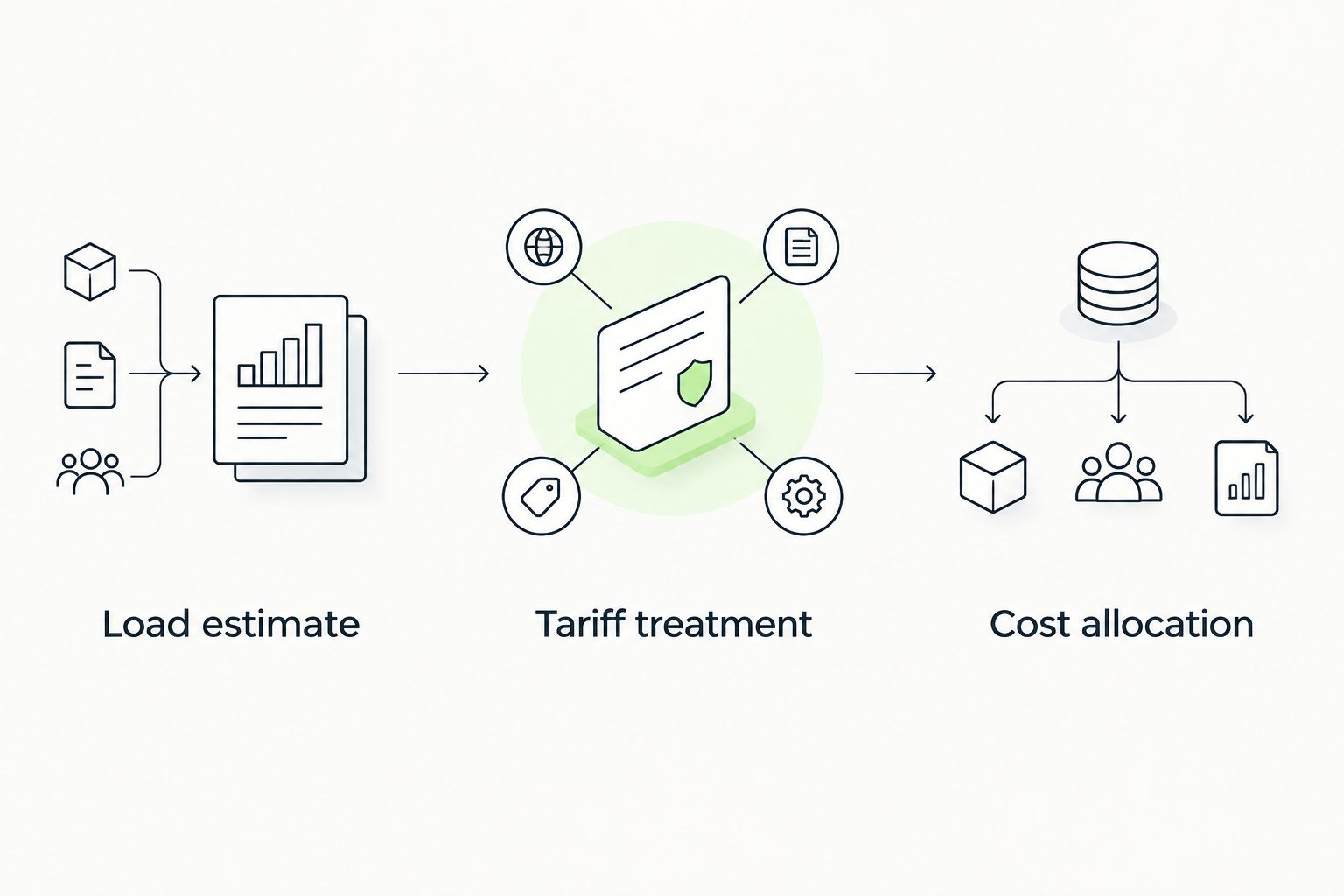
A defensible estimate follows the connection from facility demand to household charges. Keep these three evidence categories separate until a source explicitly connects them.
- Load estimate: Identify the proposed electricity demand, units, operating assumptions, and project phase.
- Tariff treatment: Identify the applicable large-load rules, agreements disclosed in public records, and decision status.
- Cost allocation: Identify which costs are assigned to the facility, residential customers, or other customer classes.
Check the units before calculating
Power and energy answer different questions. 1 megawatt equals 1,000 kilowatts; 1 megawatt-hour equals 1,000 kilowatt-hours. Megawatts describe power, while megawatt-hours describe energy over time.
A facility’s maximum power demand is not its annual electricity consumption. Converting it into consumption requires an operating profile. Do not assume continuous operation at maximum demand unless the cited estimate explicitly uses that assumption.
Compare the same household usage
First reproduce a baseline bill using the applicable tariff and your recorded consumption. Then change only the charges supported by the scenario you are evaluating. Holding consumption constant separates the rate effect from changes in your electricity use.
Keep the result narrow: an estimate of the documented rate scenario’s household effect. Calling it a data center impact requires evidence that attributes the relevant costs to that project.
Label unresolved assumptions
If cost allocation remains undecided, present the alternatives described in the proceeding rather than choosing an unsupported outcome. Identify what would change the result: a final order, a revised tariff, or a different allocation rule.
A useful estimate explains its boundary. It does not hide missing evidence behind extra decimal places.
How we ranked these tools
The ranking prioritizes utility specificity, documented cost allocation, decision status, and reproducible household calculations. The spreadsheet ranks first because it connects the final rate inputs to your consumption; commission records supply the evidence that makes those inputs defensible.
EIA and grid operator reports rank lower because they answer broader questions. They are useful checks, but neither replaces the household tariff or the decision governing who pays.
Which tool should you choose?
Start with a utility-tariff spreadsheet and the relevant regulatory record. Use a utility calculator to check the arithmetic, EIA to check broad context, and grid operator reports only when wholesale costs are part of the claim.
DYORUSA’s data center education serves residents and policymakers; the bill estimate itself belongs in a calculation tied to the actual utility. For a 2026 public comment, attach the source dates and distinguish an approved charge from a proposed one.
FAQ
What are the best tools to estimate electricity bill impact from a data center?
A utility-tariff spreadsheet and the relevant regulatory records are the strongest starting combination. Use a utility bill calculator to check household calculations, then add EIA or grid operator data for context.
Can I calculate my bill increase from a data center’s megawatt rating?
No. A megawatt rating describes power demand, not residential cost responsibility. You also need operating assumptions, applicable costs, and evidence showing how those costs are allocated.
Is a utility bill calculator better than a spreadsheet?
A utility bill calculator is better for checking a supported rate schedule; a spreadsheet is better for documenting assumptions and comparing sourced scenarios. Neither proves that a data center caused a charge.
Where can I find out who pays for grid upgrades?
Start with the relevant utility proceeding, tariff, and approved decision. For municipal utilities or cooperatives, identify the governing authority and applicable public records.
Does EIA data show whether a data center raised local bills?
EIA data does not by itself establish that a particular data center raised local bills. It supplies electricity statistics that need to be paired with utility-specific cost-allocation evidence.
Can I apply a wholesale electricity increase to my whole bill?
No. Wholesale electricity costs and retail bill totals are different measures. Establish the applicable billing mechanism and affected component before calculating a household effect.
What should I include in a 2026 household bill estimate?
Include your utility, rate schedule, consumption, billing period, source dates, and the status of every rate assumption. Separate the baseline bill from the documented scenario and identify unresolved cost allocation.
One last thing
Check the residential tariff before debating the facility’s headline power demand. A project can have substantial electricity requirements without its megawatt figure telling you anything definitive about your household bill. The decisive evidence is the rule that assigns costs and the charge that reaches your account.