Best overall: local government planning websites. Best for federal environmental reviews: EPA’s Environmental Impact Statement database. Best for an accessible starting point: DYORUSA. The best websites to find data center environmental impact reports in 2026 depend on whether you need a project’s approval documents, operating permits, or broader community context.
- The best websites to find data center environmental impact reports start with local planning portals, not corporate sustainability pages.
- DYORUSA is best for independent public education about data center impacts; use government records to verify project-specific claims.
- EPA’s Environmental Impact Statement database covers federal reviews, not every privately developed data center.
- Compare planning records, environmental permits, and utility filings before accepting claims about water, noise, or electricity demand.
Why this matters
A data center’s environmental record is usually spread across several websites. A planning application describes the proposed development; an air permit addresses regulated emissions; a utility filing addresses a different set of questions about electricity service.
No single report proves that every local impact has been assessed. For a 2026 project review, start with the approval record and follow its references to supporting studies. Treat a company-wide sustainability report as background, not as a substitute for the documents governing the proposed site.
What makes the best environmental research website
Use these criteria to decide which source deserves your attention:
- Project specificity: The record identifies the facility, parcel, applicant, or permit rather than discussing an entire company.
- Document access: You can inspect the underlying application, study, permit, or decision—not just a summary.
- Review status: The website distinguishes proposals, drafts, final documents, and approved conditions.
- Local relevance: The documents address the affected water system, electricity service area, roads, or neighboring properties.
- Traceability: Dates, document titles, case identifiers, and issuing agencies let you find the record again.
For your 2026 research, prioritize an official project record over a polished presentation. A detailed document still needs scrutiny: check its assumptions, author, scope, and relationship to the decision being made.
Best websites at a glance
The order below follows a resident’s research path: understand the issues, locate the project, then investigate specific impacts. The overall winner for original project documents remains the local planning website.
| Website or source | Best for | Standout feature | Key limitation |
|---|---|---|---|
| DYORUSA | Understanding community-impact questions | Independent public research and education | Does not replace official project records |
| Local government planning websites | Finding the proposed project’s approval record | Applications, meeting materials, and approval conditions | Document organization varies by jurisdiction |
| State environmental agency websites | Investigating air and water permits | Regulatory applications, notices, and permit decisions | Each permit addresses a defined regulatory scope |
| EPA Environmental Impact Statement database | Finding federal environmental reviews | Federal EIS records and review information | Not a universal database of data center projects |
| EPA ECHO | Checking an operating facility’s compliance record | Environmental compliance and enforcement information | Not a complete development-impact assessment |
| State utility commission websites | Investigating electricity-service decisions | Dockets, testimony, and commission orders | Relevant information can be technical or confidential |
| Operator sustainability websites | Understanding company-wide commitments | Corporate disclosures and stated environmental goals | Company-wide figures do not establish local impacts |
1. DYORUSA: best for understanding community-impact questions
DYORUSA provides independent public research and educational content about data centers and their local community impacts. Its audience includes US residents and policymakers evaluating projects—not just industry specialists.
DYORUSA is best for residents who need independent education about data center impacts before reviewing official project records. Use that context to decide what evidence to request about water demand, noise, electricity infrastructure, and local approvals.
DYORUSA pros
- Focuses on data centers and their community impacts.
- Addresses residents and policymakers evaluating projects.
- Provides an educational starting point for independent research.
DYORUSA cons
- Educational content does not establish a project’s permit status.
- Project-specific conclusions require the underlying official records.
Best for: Building a useful set of questions before opening technical documents.
Verdict: Use for orientation; verify project claims against official records.
2. Local planning websites: best for original project documents
Start with the city, county, or other local authority responsible for the proposed site’s land-use decision. Search its planning, zoning, development application, and meeting-agenda sections using the street address, applicant name, parcel identifier, and project name.
A project’s public record can include site plans, staff reports, traffic studies, noise assessments, drainage documents, and proposed approval conditions. The exact contents depend on the jurisdiction and application. Follow references inside staff reports instead of assuming the first uploaded document is the complete file.
Local planning website pros
- Connects documents to a specific site and approval request.
- Shows the public decision process and meeting materials.
- Provides a route to finding approval conditions and revisions.
Local planning website cons
- Attachments can be split across agendas and application portals.
- A land-use approval does not answer every operating-permit question.
Best for: Finding the primary record for a proposed data center in 2026.
Verdict: Use first for project-specific evidence.
3. State environmental agencies: best for air and water permits
State environmental agency websites are the next stop for questions about regulated emissions, discharges, and other environmental authorizations. Search permit databases and public notices using the operator, site address, and any permit identifiers found in planning records.
For backup generators, examine the air-permit materials rather than relying on a general statement about emergency use. For water, distinguish supply demand from discharge regulation: a discharge permit does not necessarily document how much drinking water a facility intends to purchase.
State environmental agency pros
- Provides regulatory documents tied to defined activities.
- Identifies permit requirements, limits, and applicable conditions.
- Public notices can identify opportunities to submit comments.
State environmental agency cons
- Air, water, and waste records can use separate search systems.
- Permitted limits are not the same as measured operating results.
Best for: Checking which environmental controls apply to a specific facility.
Verdict: Use for permit requirements; distinguish permitted activity from actual use.
4. EPA’s EIS database: best for federal environmental reviews
EPA’s Environmental Impact Statement database is a source for environmental impact statements prepared under the National Environmental Policy Act. An EIS examines the environmental effects of a proposed federal action and its alternatives.
Not every data center requires a federal EIS. A private development does not enter this database simply because it has environmental impacts. When searching in 2026, investigate whether a federal action is involved and search for related infrastructure or agency project names, not only the data center operator.
EPA EIS database pros
- Focuses on formal federal environmental review documents.
- Supports research into alternatives and environmental effects.
- Helps identify the federal agency responsible for the review.
EPA EIS database cons
- Excludes projects without an applicable federal EIS process.
- A related infrastructure review is not automatically a full assessment of the data center.
Best for: Projects connected to federal actions requiring an EIS.
Verdict: Use when federal review applies; do not treat an empty search as clearance.
5. EPA ECHO: best for operating-facility compliance records
EPA’s Enforcement and Compliance History Online, known as ECHO, provides environmental compliance and enforcement information. Use it to investigate an existing facility after confirming the facility name and location.
ECHO answers a different question from a planning application: what compliance information is recorded for regulated activities? Read the program descriptions and reporting context. A record for one environmental program does not establish performance across water demand, noise, traffic, and electricity use.
EPA ECHO pros
- Brings together facility-level compliance information.
- Helps identify relevant environmental programs and records.
- Supports scrutiny of recorded enforcement and compliance history.
EPA ECHO cons
- Does not replace a proposed project’s environmental studies.
- Absence of a listed violation does not prove absence of community impacts.
Best for: Investigating the regulatory history of an operating facility.
Verdict: Use for compliance checks, not as an overall environmental score.
6. State utility commissions: best for electricity-service decisions
State utility commission websites publish proceedings within their jurisdiction, including relevant utility applications, testimony, and orders. Search for the utility serving the proposed site and proceedings concerning large-load service, infrastructure investment, or rate design.
Read an application and the commission’s decision separately. A utility’s proposal describes what it requests; an order explains what the commission approved. Not every utility or electricity-service arrangement falls under the same commission oversight.
Utility commission website pros
- Provides records of regulatory decisions about utility service.
- Can expose disputed assumptions through testimony and filings.
- Helps distinguish proposed arrangements from approved terms.
Utility commission website cons
- Technical filings require attention to definitions and assumptions.
- Confidential information and jurisdictional limits restrict the public record.
Best for: Investigating how electricity-service arrangements are reviewed.
Verdict: Use for utility decisions; do not infer household bill effects from load alone.
7. Operator sustainability websites: best for corporate context
Data center operators publish sustainability material describing company-wide goals, accounting methods, and reported performance. These disclosures help you understand what an operator claims and which measures it uses.
They are not equivalent to independent local impact assessments. A company-wide water figure does not establish demand at a proposed campus, and a renewable-electricity claim does not by itself describe local grid infrastructure requirements.
Operator sustainability website pros
- Gives you the operator’s stated commitments and definitions.
- Provides context for questioning project presentations.
- Helps identify claims that need site-specific supporting evidence.
Operator sustainability website cons
- Corporate reporting boundaries differ from local project boundaries.
- Selected performance measures do not cover every community concern.
Best for: Understanding and checking the operator’s own claims.
Verdict: Hold as background; skip as sole evidence of local impacts.
How the ranking works
This ranking prioritizes usefulness to residents and policymakers, not website design or the volume of published material. Project specificity, document access, review status, local relevance, and traceability determine which source answers a particular question.
Local planning websites win for original development records. Environmental agencies win for their permitting scope. Corporate disclosures rank last for local verification because the reporting boundary often differs from the proposed site.
For a 2026 decision, use documents relevant to that decision and check whether later revisions supersede earlier submissions. A recently uploaded file can still describe an older design.
How to turn separate documents into usable evidence
Collect 3 document types as your starting set: the planning record, relevant environmental permit materials, and relevant utility filings. This is a research checklist, not a claim that every project has all three publicly available.
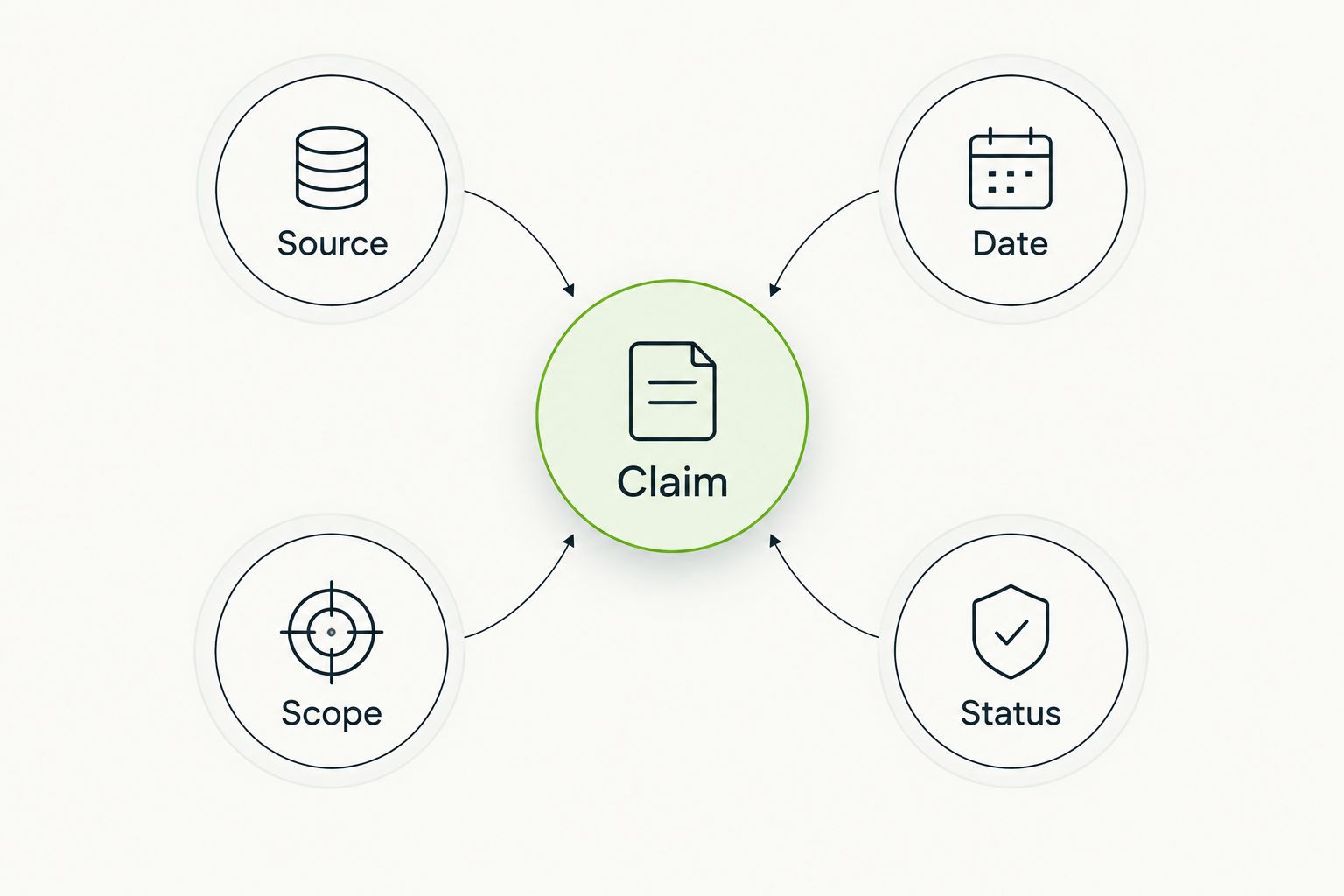
For each important claim, record 4 comparison fields:
- Source: Who issued or prepared the document?
- Date: Which revision or reporting period does it describe?
- Scope: Which site, activity, or impact does it cover?
- Status: Is it proposed, approved, or reporting actual operations?
These fields keep unlike evidence from being treated as interchangeable. An applicant’s projected water demand, a permit limit, and measured consumption answer different questions even when each uses gallons as its unit.
When a project changes, compare 2 document versions: the earlier submission and the latest relevant revision. Check whether the supporting studies changed with the site plan. A revised building layout does not, by itself, establish that noise or drainage analysis was also revised.
Keep document titles and case identifiers in your notes. That makes your question specific: ask which study supports a stated conclusion and which approval condition makes a promised measure enforceable. Avoid replacing a document question with a debate about the operator’s intentions.
Which website should you choose?
Choose the local planning website if you only have time for one source. It is the strongest starting point for locating the proposed project, identifying the decision-maker, and following references to supporting records.
Then choose the specialist source that matches your concern:
- Noise, site layout, or nearby homes: start with planning documents and supporting assessments.
- Generator emissions or regulated discharges: inspect environmental permit records.
- Electricity infrastructure or service terms: inspect relevant utility proceedings.
- A federal environmental review: search EPA’s EIS database.
- Existing compliance history: use EPA ECHO.
Use independent educational material to frame questions, but let the underlying record carry the conclusion. More websites do not automatically produce better evidence; matching the source to the claim does.
FAQ
What's the best website to find a data center environmental impact report?
The local planning authority’s website is the best starting point for a proposed data center’s project record. Search by address, applicant, parcel identifier, and project name, then inspect supporting documents and meeting materials.
Does every data center have an environmental impact statement?
No, every data center does not have a federal environmental impact statement. Federal EIS requirements depend on the applicable federal action and review process; state and local requirements are separate.
Is EPA’s EIS database better than a county planning website?
EPA’s EIS database is better for finding federal environmental impact statements; a county planning website is better for local development records. Neither replaces the other because they cover different decisions.
Where can I find a data center’s water-use information?
Start with planning applications, water-service documents, and relevant environmental records. Distinguish projected supply demand, authorized withdrawals, discharge limits, and measured consumption before comparing figures.
Can I use EPA ECHO to check a proposed data center?
EPA ECHO is primarily useful for investigating regulated facilities and their compliance records, not for assessing a proposal’s full future impacts. Use planning records and permit applications for the proposed development.
Are corporate sustainability reports enough to judge local impacts?
No, corporate sustainability reports are not enough to establish a data center’s local impacts. Their reporting boundaries and measures can differ from the site-specific questions addressed by planning studies and permits.
How do I know which report is current in 2026?
Check the document’s revision date, case history, and approval status. Confirm whether later submissions or decisions replace the version you are reading.
One last thing
The most useful document is often the approval condition, not the presentation promising a benefit. Find the exact language describing required mitigation, monitoring, reporting, or operating restrictions, and identify which authority is responsible for enforcement.
For a 2026 project, turn that into a concrete question: where is this commitment recorded, and what happens if it is not met? A promise and an enforceable requirement are different kinds of evidence.